Using ‘chemical origami’ to generate customisable, high-value chemicals from plants

The following article was originally published on the John Innes Centre news feed: Using ‘chemical origami’ to generate customisable, high-value chemicals from plants. Anne Osbourn is Co-Director of OpenPlant and this work from her group is highly relevant to the efforts of OpenPlant to create toolkits for plant metabolic engineering, but was funded from other sources.

Following the discovery of a new and very valuable enzyme which folds linear molecules into different shapes, scientists at the John Innes Centre are building a ‘triterpene machine’ which will enable them to custom-build valuable chemical compounds called triterpenes and produce them in large, cost-effective quantities. Working with the pharmaceutical, agricultural and biotechnology industries, they hope to improve existing triterpenes to make better medicines with fewer side effects, or improve the specificity of pesticides. They also hope to make completely new, custom-designed triterpenes to any specification, which could lead to development of new anti-cancer drugs, agrochemicals, industrial chemicals or cosmetics.

In the ancient Japanese art of origami, different ways of folding a single sheet of paper can transform it into an aeroplane, a flower, or a bird. Plants perform origami too – not with paper, but with chemical compounds, taking individual precursor molecules and using enzymes to fold and modify them to create many different variations.

For several years, Professor Anne Osbourn of the John Innes Centre has been studying the ‘chemical origami’ that gives rise to a large group of plant compounds called triterpenes, many of which may have valuable uses in the pharmaceutical, agricultural and biotechnology industries.

Professor Osbourn said:

“Some triterpenes are currently used in drinks as foaming agents, but there are many more exciting possibilities – new medical therapies such as anti-cancer drugs, diabetes medicines and antidepressants, for example; anti-fungal agents in crop protection, or cosmetic ingredients. All of the triterpenes we know about are based on a suite of similar molecular ‘scaffolds’ – we want to understand how these scaffolds are made, ‘folded’ and ‘decorated’ so that we might be able to engineer completely new triterpenes to make new medicines and industrial chemicals, or to improve those we already have.”

In a new research article published this week in the scientific journal Proceedings of the National Academy of Sciences, Professor Osbourn, along with colleagues at the John Innes Centre and collaborators from the USA, describes how she discovered an important part of the triterpene origami process, almost by accident.

By analysing oat plants that had been exposed to a DNA-mutating chemical, the researchers “stumbled across” a handful of mutated versions of an enzyme called SAD1. SAD1 is a triterpene synthase enzyme responsible for a critical step in building triterpenes: in its normal form, it takes a linear precursor molecule called 2,3-oxidosqualene (OS for short), and turns it into a pentacyclic scaffold – a molecule with 5 carbon rings. This is then further modified by other enzymes to produce hundreds of different triterpene compounds.

However, one of the mutated forms, which differed from the normal form by one little change in the enzyme’s structure, produced tetracyclic scaffolds with four carbon rings instead – the scaffold for a completely different set of triterpenes. Incidentally, the same mutation in an equivalent gene from a different plant, Arabidopsis thaliana, gave the same results, suggesting that this ‘molecular switch’ from pentacyclic to tetracyclic triterpene production is conserved between different plant species.

Next, the scientists tried putting the mutant SAD1 gene into yeast, a fast-growing, single-celled organism, to see if it could be used to make large quantities of triterpenes. Here, the team discovered that the SAD1 enzyme favoured dioxidosqualene (DOS) as a substrate rather than OS.

“This was an exciting discovery,” said Professor Osbourn, “because we realised that we could not only modify the enzyme to produce different triterpene scaffolds, but we could also modify the building block to make different more highly oxygenated scaffolds.”

The PNAS article presents just one part of ongoing work by the Osbourn lab to harness the power of genes and enzymes to generate high-value chemicals from plants.

Professor Osbourn said:

“Here at the Norwich Research Park we’re building a ‘Triterpene Machine’; a toolkit of molecular parts we can put into yeast, or a recently developed rapid expression system using tobacco leaves, which we hope will allow us to custom-build valuable triterpenes and produce them in large, cost-effective quantities. Working with the pharmaceutical, agricultural and biotechnology industries, we hope we’ll be able to modify known triterpenes to improve their existing applications – to make better medicines with fewer side effects, or improve the specificity of pesticides, for example. We might even be able to make completely new, custom-designed triterpenes to any specification we want, which could provide us with new anti-cancer drugs, agrochemicals, industrial chemicals or cosmetics. The possibilities are potentially endless!”

This research was funded by the Biotechnology and Biological Sciences Research Council, the John Innes Foundation and a Norwich Research Park Studentship Award.


Image by Ftiercel [Public domain], shared via Wikimedia Commons

[Closes 31 Aug 2016] Job opportunity for Synthetic Biology SRI Administrative Assistant

The Synthetic Biology Strategic Research Initiative (SRI) is based in the Department of Plant Sciences. We are seeking a part-time (0.5FTE) Administrative Assistant who will work closely with the SRI Co-ordinator, Dr Jenny Molloy, in the research group of Professor Jim Haseloff (SRI Chair).

SRI logoThe role-holder will provide administrative support to the Synthetic Biology SRI Co-ordinator, maintain a website for the initiative, assist with events, publicity organisation, committee meetings and other related administration.
The successful candidate will have an A-Level in Biology, or equivalent; knowledge of web design and implementation; the ability to use social media as a PR tool in a professional setting; events management experience. You will have excellent communication skills and a pro-active and flexible approach.

Fixed-term: The funds for this post are available for 3 years in the first instance.

To apply online for this vacancy and to view further information about the role, see the listing on jobs.ac.uk.

[Closes 14 Aug 2016] Vacancy at Earlham Institute, Postdoctoral Researcher - Synthetic Biology

Application deadline 14 Aug 2016Apply here >> The Synthetic Biology Group at the Earlham Institute is part of the science faculty and is engaged in engineering photosynthetic organisms for bio-production and improving plants for increased production and nutritive value. We are interested in the development of foundational tools and technologies for plant synthetic biology and also in applying such tools, including precision genome engineering technologies, to adapt photosynthetic organisms for industrial biotechnology and to make crops that are healthier to consume and less environmentally damaging to cultivate. We believe in responsible and open innovation and science and are actively engaged with efforts to extend this ethos to bioresources.

We currently have an opportunity for an outstanding post-doctoral scientist within our Synthetic Biology Group. The candidate must have a comprehensive understanding of the principles of genomics and molecular biology, and be proficient in techniques used in the design and construction of genetic circuits.

The project aims to design and assess novel synthetic regulatory elements for plants. In doing so we will gain an understanding of plant promoter architecture and advance technologies for quantifying expression from genetic circuits in plant cells.

The post holder will have a PhD in Synthetic Biology, Molecular Biology, Plant Molecular Biology or a related subject with an understanding of the control of transcription and gene expression, particularly in eukaryotes. Experience in molecular biology laboratory techniques, including molecular cloning, recombinant DNA technologies, genotyping and assessment of gene expression is essential and experience in genomic data analysis and transformation and transfection of plant cells is desirable.

The post holder will have access to the cutting edge laboratory automation facilities in the Earlham Institute’s DNA Foundry and also interact with other synthetic biology ventures on Norwich Science Park e.g. the OpenPlant Synthetic Biology Centre.

The Earlham Institute is a vibrant, contemporary research institute. We host one of the largest computing hardware facilities dedicated to life science research in Europe and our aim is to ensure that biological science in the UK has access to a skill base in genomics and bioinformatics to deliver programmes leading to improved food security, advances in industrial biotechnology and improved human health and wellbeing.

At EI we offer competitive salaries, excellent defined contribution pension scheme, life assurance, tailored learning and development and onsite sports facilities that are available to all staff and their guests.

CamCreatives | Reframe: Get unstuck and create breakthrough ideas

einstein
einstein

CamCreatives event - sign up here

Wednesday 29th June, 7-9pm Hot Numbers Cafe Dale's Brewery, Gwydir St, Cambridge, CB1 2LJ

Title: Reframe: Get unstuck and create breakthrough ideas

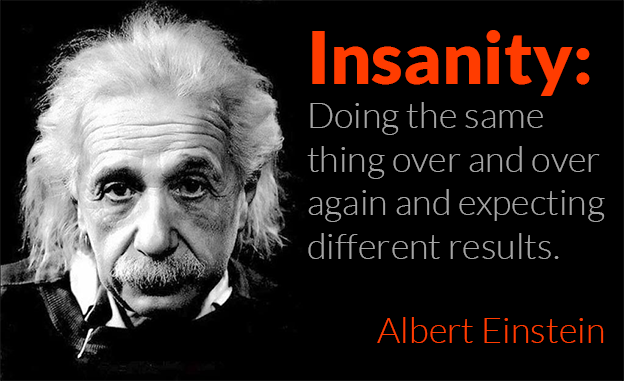
Einstein defined insanity as “doing the same thing and expecting different results” Simply changing your mindset and behaviour can create better outcomes for you and your team. Experience for yourself the world’s most successful creative leadership programme to solve real challenges here in Cambridge.

[spacer height="20px"] THNK School of Creative Leadership ’s mission is to catalyze innovative solutions to the world’s challenges through experiential learning programmes. At this workshop you will learn how you can adapt your own mindset to get the most out of team working. You’ll experience an interactive session using THNK methodology to help generate new perspectives and come up with new solutions. You’ll apply the methodology to a real challenge by a local group and there’ll be a prize for the winning solution. John Monks is a lifelong changemaker, startup cofounder and digital transformation expert. He completed the THNK Leadership Programme in 2015 and is on a mission to make the world a better connected place. John found himself drawn to purposeled work and is committed to bringing knowledge and tools into the world’s leading companies. Tonight John will present you with key challenges facing our city and introduce a key THNK methodology to apply to these challenges live. You will leave enabled to lead in a more creative way in your work and have greater impact. John will be joined by Nicky Shepard, founder of Cambridge Style Week, who is committed to building a creative space for Cambridge a community with the space, tools and resources to leverage the creativity in our City and have lasting impact. Poet and food activist Peter Bickerton will also be on hand to entertain us.

[spacer height="20px"] John is cofounder of DOTWORKS , a startup aiming to make the world a betterconnected place, and Trustee of ActionAid, and international charity working with the poorest women and children in the world, changing their lives for good. Nicky Shepard is a creative thinker and leader, the founder of Cambridge Style Week and committed to helping people build successful businesses. Her experience runs across drama and performing arts, events management, marketing and community building. Peter Bickerton is a science communicator, poet and writer based in Norwich. Responsible for promoting the research of The Genome Analysis Centre and the wider scientific community, he is also an enthusiastic ambassador for Thought for Food and a passionate insect eating connoisseur.

SynBio Centre for Doctoral Training Summer School

The second year students of the EPSRC & BBSRC Centre for Doctoral Training in Synthetic Biology are organizing a "Summer School - Workshop" on the 27-29 June 2016 in Oxford. On the 27th there will be talks from Industry and a workshop on commercializing research, while on the morning of the 28th there will be talks from invited academics and others. Lunch and coffee included. If you are interested, please register by filling in this form.

Global Challenges Research Fund: £600,000 Foundation Awards available

0D6A6A77-0FF1-464D-8FFEDA0E418D3C6B

The first three calls for proposals to the Global Challenges Research Fund are now open. The Fund, involving BBSRC, MRC, AHRC, ESRC and NERC, was created to ensure that UK research takes a leading role in addressing the problems faced by developing countries. Foundation Awards of up to £600,000 are available for multidisciplinary research in three areas:

  • Global Agriculture & Food Systems Research
  • Global Infections
  • Non-communicable Diseases

Deadline for outline applications: 4pm, 22 June 2016 Awards would start on 1 April 2017, for applications for proposals of ~24 months’ duration.

All research funded through these awards will be part of the UK’s Official Development Assistance (ODA). Applications must be primarily relevant to near-term or long-term benefits to the health or prosperity of Low or Middle Income Countries.

Note for Cambridge researchers:Cambridge Global Food Security and CambPlants coordinate a large network and can help you find the collaborators you need across the University for a multi-disciplinary proposal that meets the funding criteria. In anticipation of further funding calls in this area with a short turnaround (GCRF, Newton Fund, etc),the Global Food Security SRI are planning a series of Sandpit events on themes within Global Food Security to support Cambridge academics in generating and developing new ideas, finding collaborators (both within Cambridge and from external organisations), and submitting bids. Please let Jacqueline Garget – Coordinator of the Cambridge Global Food Security SRI - know if you would like to be involved in the events or if any research ideas you’re thinking of submitting that fall within the remit of the Initiative (www.globalfood.cam.ac.uk).

Plant Synthetic Biology at GARNet2016: Innovation in the Plant Sciences

GARNet-logo
GARNet-logo

Plant Synthetic Biology is the topic of a dedicated session at the GARNet2016 meeting this September, in addition to a workshop on CRISPR-Cas. If you missed out on the GARNet/OpenPlant CRISPR workshop last year, this is a great chance to get familiar with this increasingly important technique.

From the GARNet website:

GARNet2016: Innovation in the Plant Sciences. September 6th-7th 2016, Cardiff.

Registration is now open for the exciting GARNet2016 meeting. We have put together a set of talks on a broad range of subjects that are all linked by their use of novel experimental techniques.

Session 1: Frontiers in Plant Imaging

Session 2: Enabling the Translational Pipeline

Session 3: Plant Synthetic Biology

Session 4: Genomics tools for Gene Discovery

Session 5: Cell Signaling

In addition we will have three workshops that aim to support new technologies that are available to plant scientists:

* Pre-Meeting Workshop: Finding your Arabidopsis Gene in Wheat.

Organiser: Philippa Borrill and Cristobal Uauy

* Workshop 1: Usage and Application development within Araport.

Organiser: Agnes Chan and Chris Town

* Workshop 2: Introduction to CRISPR-Cas, troubleshooting target design and verification of mutants. Organiser: Vladimir Nekrasov and Amanda Hopes

We encourage young researchers to participate in our extended poster session and to apply to give a 2 minute flash presentation.

All information about registration, conference accomodation and the scientific programme can be found at: http://garnet2016.weebly.com/

GARNet will have at least £500 available to support travel of UK-based PhD students to the meeting. This money will be distributed on a first come, first-serve basis. Please contact Geraint Parry (geraint@garnetcommunity.org.uk) about the availability of these travel scholarships.

Please pass this information about GARNet2016 onto anyone who you think will be interested in this conference. If you have any questions please contact Geraint Parry geraint@garnetcommunity.org.uk

Syngenta offers iGEM Sponsorship for manufacturing Resilient RNA-based biocontrols

2016Syngenta are offering iGEM teams sponsorship funding to explore areas of innovation surrounding RNA-based Biocontrols. After the introduction of a Special Plant Prize into iGEM and adoption of the 'PhytoBricks' plant common syntax, championed by OpenPlant labs, several plant-focused iGEM teams are participating in this year's competition and may be interested in the opportunity. From Syngenta: "The challenge with RNA-based biocontrols is finding the balance between scaling up the use of this highly effective agricultural tool while also being able to clearly demonstrate the value to multiple stakeholders. Syngenta and other developers of this tool must show clear demonstration of value creation through both the technological development (what this tool is developed to support) and communication development (how the tool is effectively explained and rolled out).

We are looking for iGEMers to explore technical practices that take into account the implementation of such a tool, which also involves thinking through human practices."

For more information and instructions on how to apply, see the iGEM website.

Genome Editing and the Future of Farming (attendance sponsorship available)

eventlogo
eventlogo

On the 6th September, leaders in the field of livestock genetics will gather at The Roslin Institute where they will discuss the future of farming and the implications of Genome Engineering. A series of talks and panel discussion sessions will examine the global scene and case studies from academia and industry, highlighting the opportunities and challenges in the field.

Who should attend?

Researchers in academia or industry and policy makers with interests in food security and the livestock sector, particularly in the genetic techniques to improve livestock and the regulatory issues surrounding these new technologies.

Sign Up >>>

Sponsorship for Early Career Researchers

The Biotechnology & Biological Sciences Research Council (BBSRC) is supporting this event with the offer of attendance sponsorship for UK university-based early careers researchers who register for this meeting and are working currently on BBSRC-funded research. BBSRC will consider sponsoring up to 10 individuals within this category, which is defined as BBSRC-funded post-doctoral research staff with five years or less of total active research employment.

  • Sponsorship will be offered in the form of reimbursement of travel and subsistence costs after meeting attendance
  • Researchers who may be eligible for BBSRC sponsorship should register via the process defined for all meeting attendees. Once registered, please request a sponsorship application form from Emilie Brady (emilie.brady@ed.ac.uk); the deadline for submission of completed applications is 5pm Wednesday 6th July 2016.
  • Awardees will be selected by BBSRC Office, taking into account the need for scientific range and researcher / institutional diversity. Registrants for this meeting should therefore be prepared to meet their own attendance costs if unsuccessful. Sponsorship applicants will be informed of the outcome by Friday 22nd July 2016

Source: Genome Editing and the Future of Farming – The National Institutes of Bioscience

Synthetic Biology UK 2016

biochemical logo

14—16 November 2016: Dynamic Earth, Edinburgh, UK

Synthetic Biology is a field that has rapidly expanded. It relies on multidisciplinary approaches and delivers transdisciplinary advances that have the potential to redefine our understanding of the natural world and to significantly contribute to our society and economy.

The UK is a world leader in science and engineering, and Synthetic Biology has been identified as an important area for our continued success. Key to that success is a cohesive, vibrant and multidisciplinary community, open to collaboration, open to advances and driven to exceptional research with meaningful outcomes.

That cannot be delivered by a single research centre, single funding body or hosted by a single learned society. The SynBio UK conference aims to showcase UK Synthetic Biology research and to create a focal point for the community, embracing its diversity and fostering its growth and its engagement with society.

Topics covered in this meeting will be published in Biochemical Society Transactions

Abstract deadline: 12 September 2016 Abstract submission is now available

Earlybird registration deadline: 12 September 2016

Oral communication slots are available at this meeting. All attendees, particularly researchers in the early stages of their career, are invited to submit a poster abstract for consideration as an oral communication.

Student Bursaries are available for this meeting. Not a member of the Biochemical Society? Join today and save up to £100 on your registration fee.

For more information, including the full program, please see here.

SYNENERGENE Forum 24-25th June 2016 Amsterdam

visions of the future

Synthetic Biology – visions of the future

SYNENERGENE Forum 24-25th June 2016 Amsterdam

The SYNENERGENE Forum is a large public event which will discuss the promises and implications of synthetic biology from a societal perspective.

Synthetic biology From the beginning of this century synthetic biology has emerged as a new engineering science of life. It uses the rapidly increasing possibilities for both “reading” and “writing” DNA to design and synthesize living cells and biological systems with functions that do not exist in nature. Synthetic biology offers new options for innovation in the fields of health care and sustainable production of energy and materials, but may also more and more become a subject of public controversy about potential risks and commercial exploitation of natural resources.

Responsible research and innovation In order to deal with the governance challenges resulting from this tension, we need to establish conditions for responsible research and innovation (RRI) in the field. As a European mobilization and mutual learning action plan, involving nearly thirty parties from all over Europe, SYNENERGENE contributes to this aim. During the two-day Forum event we want to share our RRI experiences and achievements with relevant stakeholders and publics, including scientists, civil society organizations, industry and policy makers, and discuss the development of a synthetic biology agenda for the (near) future. Addressing the synthetic biology agenda implies a focus on: • Opportunities of synthetic biology relating to societal challenges • Concerns about synthetic biology relating to possible negative implications • Engagement with synthetic biology as a contribution to responsible research and innovation

Program The SYNENERGENE Forum offers a two-day program on Friday and Saturday 24-25th June in the Amsterdam Science Centre NEMO (http://www.e-nemo.nl/en/). The first day is a conference with plenary and parallel sessions focusing on core issues and activities addressed by SYNENERGENE. During the second day SYNENERGENE partners will put “synthetic biology on stage” through debates, theatrical performances and a BIO·FICTION film festival.

For full program and to register, please see here: https://www.rathenau.nl/en/agenda/synenergene-forum-2016

Agri-Tech Career Workshops inc. Synthetic Biology Theme

CambPlantsHub_NewIdentityLayout_vectorDo you want to raise your profile? Experience presenting to a multidisciplinary audience? Find ideas and inspiration? Find out how it really looks like to work in industry?

CambPlants is organising THE event to go to if you are thinking of what’s the next step in your career.

WHAT: This two part workshop series starts with a half day skills and training workshop (11th May) followed by a showcase event highlighting career options and a lot of networking opportunities with Industry representatives (5th July)

REGISTER HERE >>>

Part 1 - Career Workshop: paving the way to your career If you want to let industry know about what you doing by presenting at FarmRound, an agri-tech career afternoon, you need to participate in this workshop! A bespoke workshop focusing on ‘business-like’ presentation skills preparing you for the flash presentation to be given at FarmRound: an agri-tech career afternoon. Researchers will be given coaching. If you want to present in Part 2, this workshop is compulsory. An ‘industrial prize’ is at stake…. Register here

Part 2 – FarmRound: an agri-tech career afternoon A half day event including a keynote speaker, talks from industrialists about their careers, flash presentations from PhDs and Postdocs and lots of time for discussions. There will be an ‘Industry fair’ Drinks Reception where early career researchers can interact closely with industrialists by visiting a wide range of industry stands. The best flash presentation presented by early career researchers will win a super exciting mystery prize. programme available soon. This day will be a unique opportunity for researchers to meet with industry representatives and to understand what it is like to work in the industry sector by being aware of different career paths. Register here

FOR WHOM: Early career scientists (PhDs & Postdocs) working in plants, synthetic biology, big data, agricultural, environmental, food and other relevant sciences contributing to our food supply.

Limited places available – Register your interest NOW

Exciting collaboration opportunity to test Oxford NanoPore device for soil/plant-related sequencing

Details from Simon Hazelwood-Smith at Science Practice "We are Science Practice, a design and research company focused on applying the principles of design to science. One of our interests is in ways of increasing access to scientific testing in agriculture, and we are currently developing a paper microfluidic device for testing soil nutrients like nitrates, at Imperial College London.

We also have a MinION (a pocket-sized genetic sequencing machine) from Oxford Nanopore and we would like to try using our last two MinION flow cells for agricultural testing. We are looking for a collaborator with lab access who would be interested in trying this out to see if we get any interesting results.

Currently our plan is to test nitrates in two different soil samples with our microfluidic device, and also to use MinION sequencing to identify organisms (bacteria, fungi etc.) found in these two soil samples. The aim is to see if it is possible in principle to detect a relationship between nitrate levels and nitrogen-fixing bacteria. This little project would be about two days of lab time (1 day to sequence each soil sample). However we are open to suggestions for other agriculture (e.g. plant) related sequencing projects from anyone who is interested in exploring this exciting new piece of technology with us."

If interested, please contact Jenny Molloy (jcm80@cam.ac.uk) for more information.

Cambridge-Africa ALBORADA Research Fund: 2016 Call

image_preview
image_preview
More info on Cambridge-Africa website >>>

The Cambridge-Africa ALBORADA Research Fund was established in 2012, with generous support from The ALBORADA Trust. The fund supports pairs of researchers (post-doctoral level and above) from the University of Cambridge (or an affiliated institution such as the Wellcome Trust Sanger Institute and NIAB) and sub-Saharan African institutions, across all disciplines, to initiate and/or strengthen research collaborations. This is achieved by providing funding ofbetween £1,000 and £20,000, for:

  • research costs (such as reagents, fieldwork and equipment)
  • research-related travel between Cambridge and Africa
  • conducting research training activities in Africa (e.g. setting up courses/workshops).

Please read carefully the Terms & Conditions, including eligibility criteria, before applying. 

How to apply

The online application form has been designed to allow both applicants (Cambridge- and Africa-based) to log in, update, save and eventually submit electronically. 

To access the form, the Cambridge based applicant mustRegister Here. Only applicants with@cam.ac.uk, @sanger.ac.uk and @niab.ac.uk email addresses can register.

The Cambridge-based applicant must then log in to the ALBORADA application form, where they will see the words "Invite a 2nd applicant to view/edit this submission". Click on this link in order to invite the Africa-based applicant to register and edit the forms.

If you are eligible to apply, but are unable to register on the page above, then please contact Sophia Mahroo on szm21@cam.ac.uk.

If you have already registered, please Log Into access the form.

The deadline to submit an application for collaborative research funding is Sunday 5th June 2016.

Gene Discovery for Synthetic Biology: Exploring the Novel Natural Product Biosynthetic Capacity of Eukaryotic Microalgae

OpenPlant PI Professor Rob Field at the John Innes Centre has published work of relevance to those working on algae and microalgae.

O’Neill, G. Saalbach, R.A. Field (2016). Gene Discovery for Synthetic Biology: Exploring the Novel Natural Product Biosynthetic Capacity of Eukaryotic Microalgae. Methods in Enzymology 576, p 99-120.

Abstract

Eukaryotic microalgae are an incredibly diverse group of organisms whose sole unifying feature is their ability to photosynthesize. They are known for producing a range of potent toxins, which can build up during harmful algal blooms causing damage to ecosystems and fisheries. Genome sequencing is lagging behind in these organisms because of their genetic complexity, but transcriptome sequencing is beginning to make up for this deficit. As more sequence data becomes available, it is apparent that eukaryotic microalgae possess a range of complex natural product biosynthesis capabilities. Some of the genes concerned are responsible for the biosynthesis of known toxins, but there are many more for which we do not know the products. Bioinformatic and analytical techniques have been developed for natural product discovery in bacteria and these approaches can be used to extract information about the products synthesized by algae. Recent analyses suggest that eukaryotic microalgae produce many complex natural products that remain to be discovered.


Image credit: microscopic-view-of-microalgae by Learn 2 Teach, Teach 2 Learn on Flick, licensed under CC-BY-NC 2.0

ERA-CAPS Third call pre-announced: “Europe-USA Call strengthening transnational research in the Molecular Plant Sciences”

default-news-call_7 The ERA-CAPS network is pleased to pre-announce the launch of its third Transnational Call for Proposals for Collaborative Research Projects on June 23rd, 2016. The Call is entitled: The ERA-CAPS network is pleased to pre-announce the launch of its third Transnational Call for Proposals for Collaborative Research Projects on June 23rd, 2016. The Call is entitled: “Europe-USA Call strengthening transnational research in the Molecular Plant Sciences” and the Call Notice will be published at www.eracaps.org and respective sources of information. The purpose of this pre-announcement is to enable interested parties to build their consortia and start preparing their proposals. The call for pre-proposals will close on the 28th of September 2016, 12.00 CET.

The objective of this call is to stimulate true collaboration between research teams of different countries in order to achieve the highest quality projects, to increase synergies between national programmes and to strengthen international research in molecular plant sciences. The funding partners agree that this unifying approach is a fundamental prerequisite to maximise the utility of the limited resources available and to meet the European and global demand for molecular plant science innovation with a long-term perspective.

To read more, visit the ERA-CAPS Third call page. and the Call Notice will be published at www.eracaps.org and respective sources of information. The purpose of this pre-announcement is to enable interested parties to build their consortia and start preparing their proposals. The call for pre-proposals will close on the 28th of September 2016, 12.00 CET.

UK Commons Select Committee calls for 'GM and gene editing' evidence check

ImageVaultHandler.aspx

The UK Commons Science and Technology Select Committee invites views on the strength of the evidence in relation to GM and gene editing.

 Please read the Government statement before submitting a comment.

PDF
Opens in a new window
  • GM and Gene Editing: Government statement ( PDF 90 KB)

Comments will be pre-moderated.

Science and Technology 'evidence check' web forum homepage

The Science and Technology Committee invites views on the Government-provided evidence-check papers posted on this forum, in particular on the strength of the evidence and how well the Government's approach reflects the evidence.

Taking forward the work of the Institute for Government, this exercise will help shape future Committee work, including identifying areas for scrutiny hearings or for launching inquiries. We would like submitters to address the following broad questions:

  • Diagnosis: Does the Government show that it knows about the issue, its causes, effects, and scale?
  • Actions/plans: Has the Government shown that any policy intervention is evidence-based, that it has assessed the strengths/weaknesses of the evidence base, and identified other policy options?
  • Implementation:  Has the Government shown that the implementation method for the policy has been based on evidence on what works?
  • Value for money: Are the costs and benefits understood and evidence-based?
  • Testing and evaluation: Are plans for testing and evaluation adequate?

8th International Workshop on Bio-Design Automation (IWBDA), Newcastle upon Tyne, UK, August 16-18, 2016

The Eighth International Workshop on Bio-Design Automation (IWBDA) at Newcastle upon Tyne in the UK will bring together researchers from the synthetic biology, systems biology, and design automation communities to discuss concepts, methodologies and software tools for the computational analysis and synthesis of biological systems.

IWBDA_2016_crop

IWBDA offers a forum for cross-disciplinary discussion, with the aim of seeding and fostering collaboration between the biological and the design automation research communities. This year’s IWBDA will be hosted by the Interdisciplinary Computing and Complex BioSystems (ICOS) research group, Newcastle University.

OpenPlant is assembling a delegation to attend this highly relevant meeting - if you would like to attend with others from the centre, please contact Jenny Molloy on jcm80@cam.ac.uk.

Find out more at the event website >>

[Download flyer]

Topics of interest include

  • Design methodologies for synthetic biology.
  • Standardization of biological components.
  • Automated assembly techniques.
  • Computer-aided modeling and abstraction techniques.
  • Engineering methods inspired by biology.
  • Domain specific languages for synthetic biology.
  • Data exchange standards and models for synthetic biology.

This year’s IWBDA will host the BDAthlon programming contest, where teams are given a set of programming challenges and then work to solve these challenges. In addition, there will be a satellite workshop on the Synthetic Biology Open Language (SBOL).

Key Dates

  • Abstract submission deadline: April 15, 2016
  • Scholarship application due: April 30, 2016
  • Abstract and scholarship notification: May 13, 2016
  • BDAthlon team application due: May 20, 2016
  • SBOL workshop: August 15, 2016
  • BDAthlon Competition: August 16, 2016
  • Main IWBDA workshop: August 17-18, 2016

Registration will be open soon.

Abstract submission

Abstracts for oral and poster presentations should be two pages long, following ACM SIG Proceedings format. Detailed instructions can be found at: http://www.iwbdaconf.org/

ACS Synthetic Biology IWBDA 2016 Special Issue

All attendees will also be invited to submit to ACS Synthetic Biology “IWBDA 2016” Special Issue. ACS Synthetic Biology has the highest editorial standards, offers rapid publication of your research findings and imposes NO author submission, page, color, or cover art charges. We are looking for high quality submissions, for peer-review, as either short Letters or full-length Articles. The submission deadline will be announced soon.

Organizing Committee

Please feel free to contact the organizers with questions at: iwbda-exec@lists.bio-design-automation.org

  • Co-General Chair - Anil Wipat, Newcastle University
  • Co-General Chair - Pietro Lio', University of Cambridge
  • Finance Chair - Traci Haddock, iGem Foundation
  • Co-Local Chair - Goksel Misirli, Newcastle University
  • Co-Local Chair - Harold Fellermann, Newcastle University
  • Publication Chair - Avi Robinson-Mosher, Harvard University
  • Programme Committee Chair - Chris French, The University of Edinburgh

IWBDA is organized by the non-profit Bio-Design Automation Consortium (BDAC).


EUSynBioS Symposium 2016: Engineering Biology for a Better Future

EUSynBioS_Symposium
EUSynBioS_Symposium

This weekend, the first EUSynBioS Symposium, themed Engineering Biology for a Better Future, will follow SynBioBeta at Imperial College London.

The Symposium kicks off with a Visionary keynote address from none other than synthetic biology pioneer Tom Knight (Ginkgo Bioworks). A former professor at MIT and one of the very first synthetic biology entrepreneurs, Tom will give an insight into the early days of synthetic biology and talk about what the future holds. Then, a session of scientific presentations exclusively by early career synbio researchers; providing graduate students and early career post-docs a platform to present their research to peers and senior scientists.

Post-lunch, the symposium will break into smaller breakout sessions on various topics from biodiversity to design and public engagement. Led by excellent fellow members, these sessions are a great opportunity to hear other people's views on important issues in synbio today. Two inspiring speakers - Luke Alphey (Oxitec) and Emily LeProust (Twist BioSciences) - will then talk about their career paths to setting up world changing synbio companies. A must for all budding synbio entrepreneurs! Michele Garfinkel (former Policy Analyst at the J.Craig Venter Institute, and currently at EMBO) will talk next, on the world of policy making and how we can make a difference in how synbio is legislated in the future.

Finally, the symposium will close with an Open Discussion on a topic chosen by you: Gene Drives! Gene Drives have gotten a lot of press in the last few months and we have none other than the scientist who coined the term, Austin Burt (Imperial College London), joined by Michele Garfinkel and Luke Alphey, giving an introduction to what this fascinating technology holds for the future. This session is a forum to express views and get answers from experts about gene drives: How do they work? Will they change the world for the better? Is it ethical to do so? ...and many more questions, we’re sure!

[spacer height="20px"] EUSynBioS Symposium 2016: Engineering Biology for a Better Future

Sat, Apr 9, 2016 - 8:00amSun, Apr 10, 2016 - 7:00pm

Imperial College London, South Kensington Campus, London, SW7 2AZ

Get help to improve your research software - deadline April 29th

If you write code as part of your research, then you can get help to improve it - free of charge - through the Software Sustainability Institute's Open Call for Projects. The call closes on April 29 2016.

Apply here!

You can ask for our help to improve your research software, your development practices, or your community of users and contributors (or all three!). You may want to improve the sustainability or reproducibility of your software, and need an assessment to see what to do next. Perhaps you need guidance or development effort to help improve specific aspects or make better use of infrastructure.

We accept submissions from any discipline, in relation to research software at any level of maturity, and are particularly keen to attract applications from BBSRC and ESRC funding areas.

The Software Sustainability Institute is a national facility funded by the EPSRC. Since 2010, the Institute's Research Software Group[1] has assisted over 50 projects across all the UK Research Councils. In an ongoing survey, 93% of our previous collaborators indicated they were "very satisfied" with the results of the work. To see how we've helped others, you can check out our portfolio of past and current projects[2].

A typical Open Call project runs between one and six months, during which time we work with successful applicants to create and implement a tailored work plan. You can submit an application to the Open Call at any time, which only takes a few minutes, at http://bit.ly/ssi-open-call-projects.

We’re also interested in partnering on proposals. If you would like to know more about the Open Call, or explore options for partnership, please get in touch with us at info@software.ac.uk.